Kjerringøy Trading Post
A rare, historical gem
Kjerringoy trading post is one of Norway's best-preserved trading posts from the 19th century. The trading posts along the coast marked a turning point in the history of Northern Norway, where the profits from the fish trade began to remain in the north. This was crucial for the region's development throughout the 19th century.
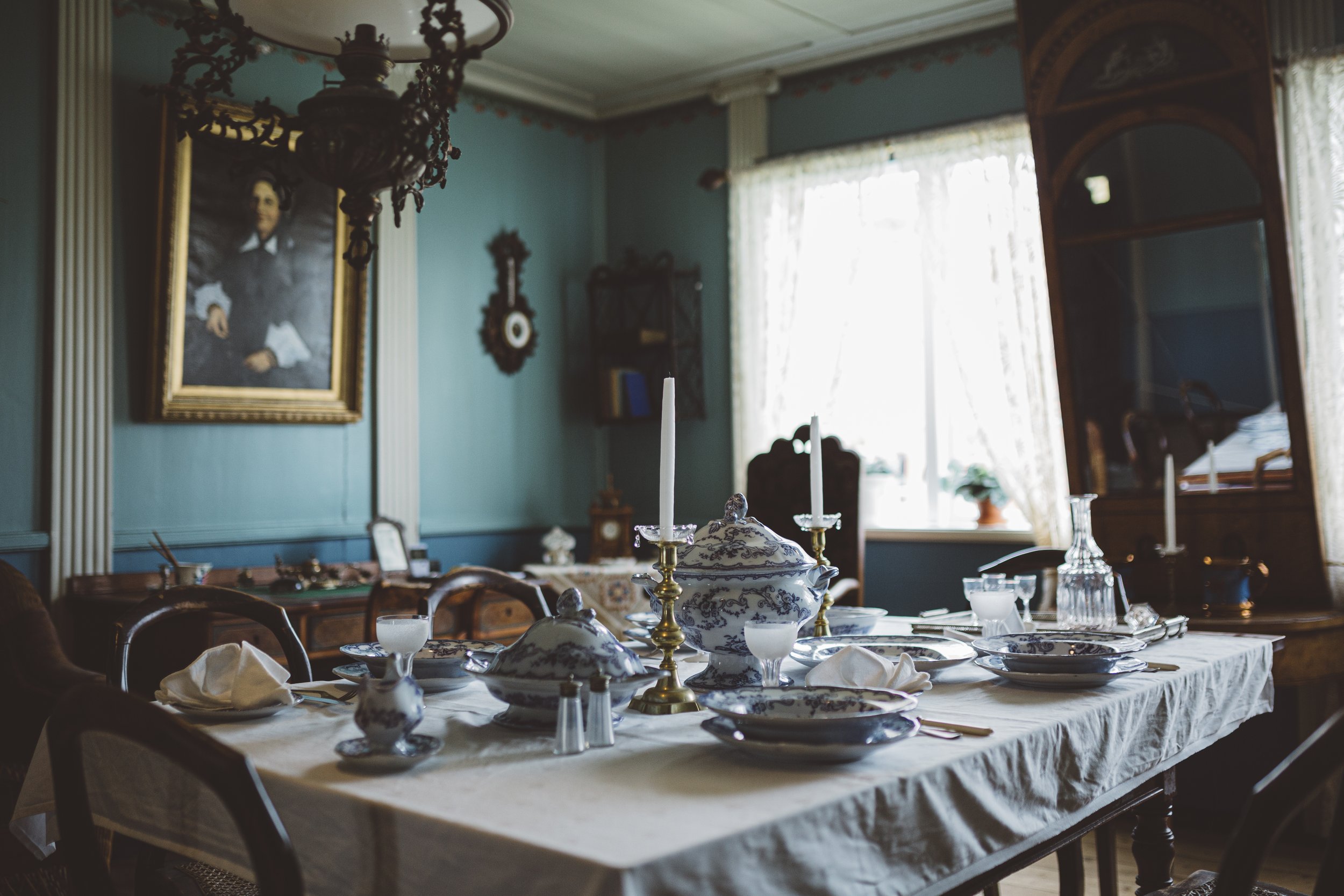
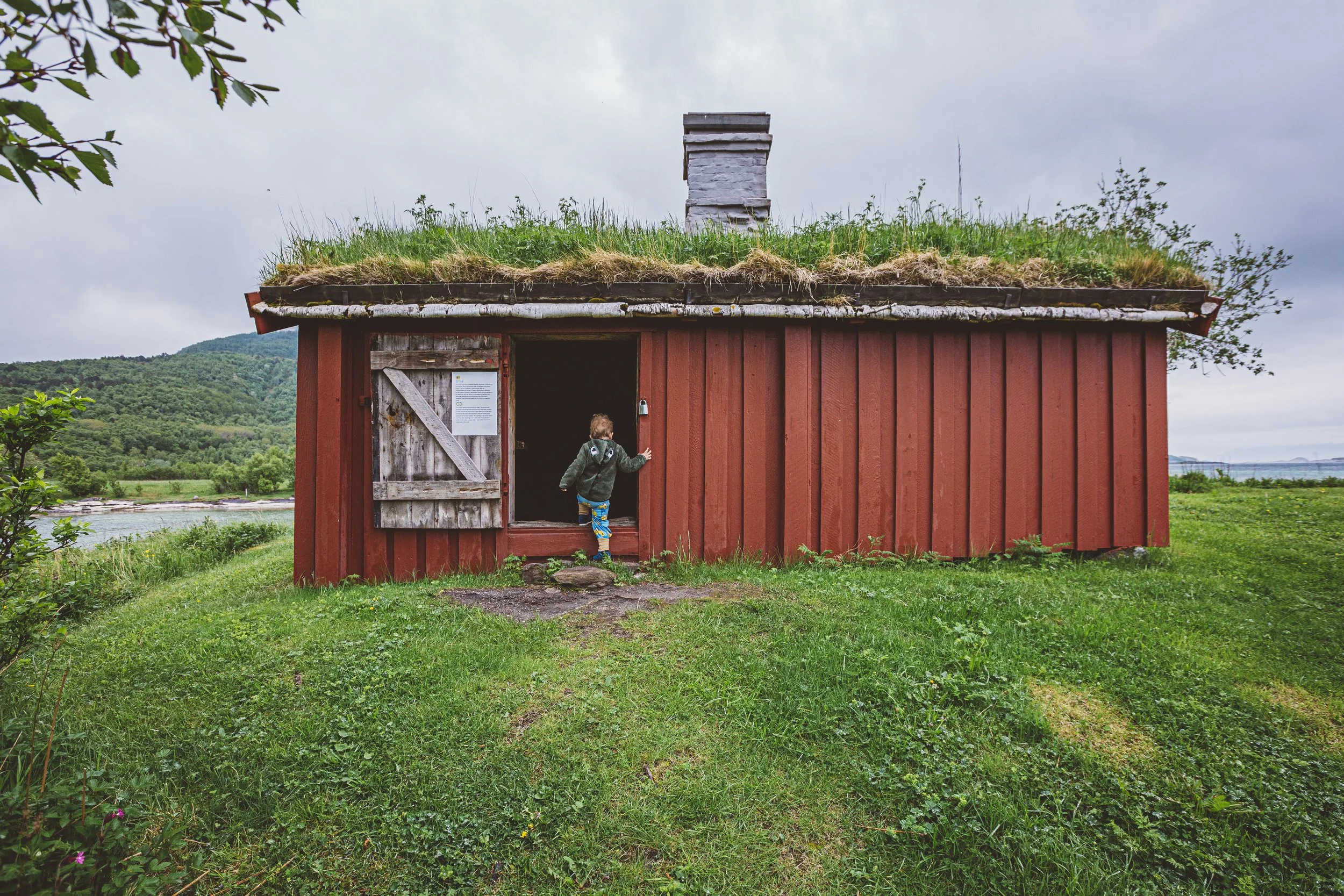
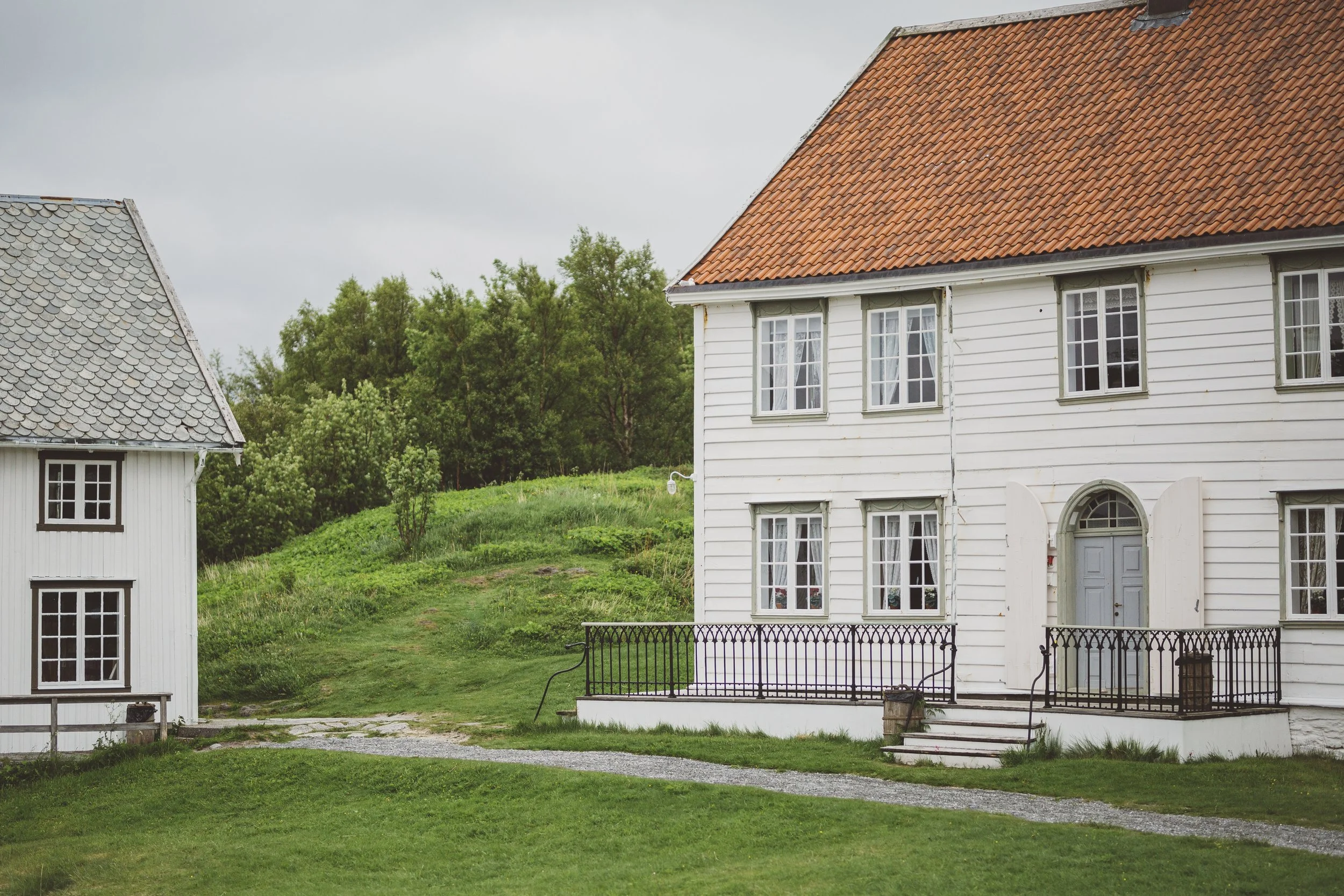
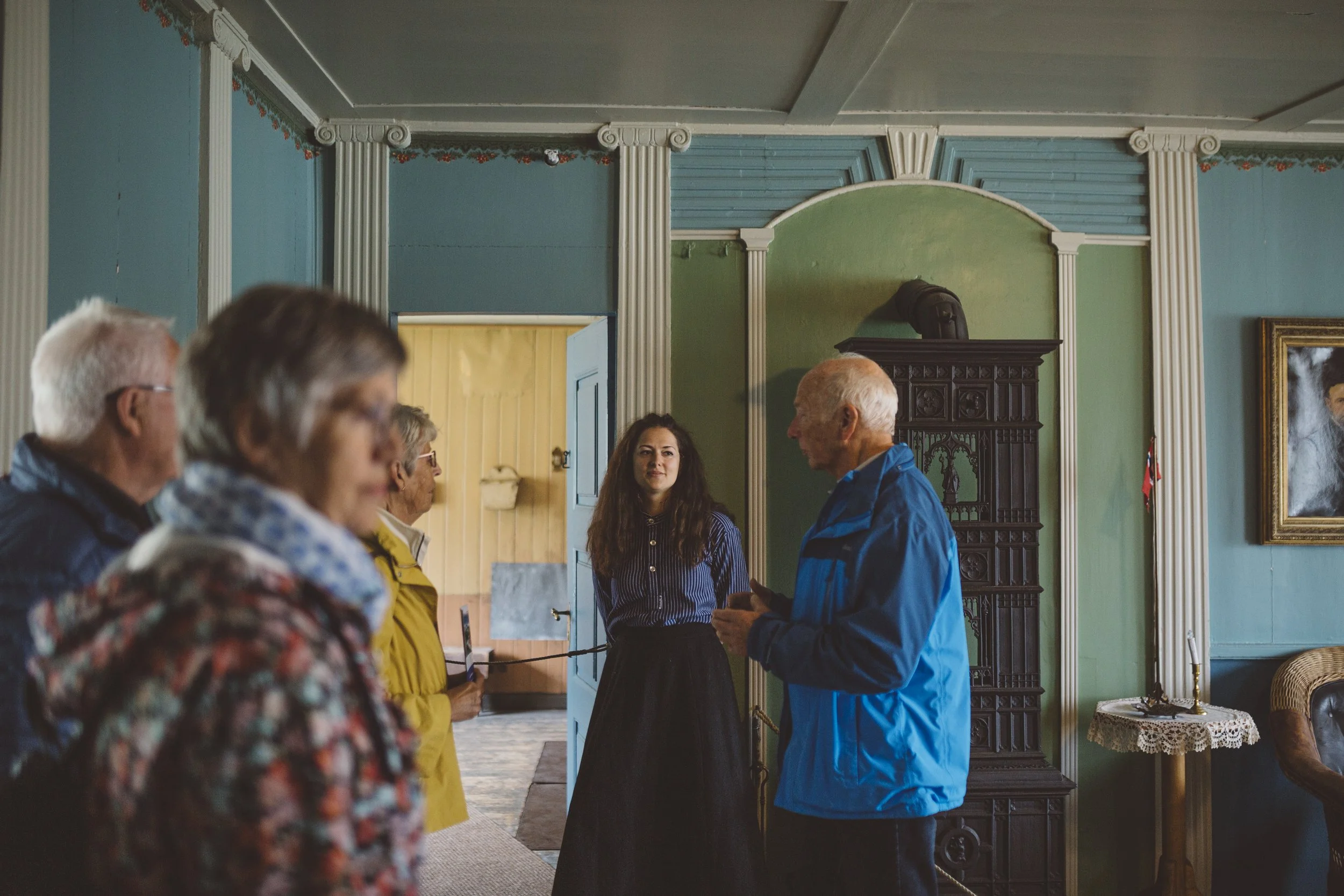
On Kjerringøy you can walk through 15 listed buildings with authentic interiors. In the Main House you will find a unique French wallpaper and historic bedrooms. The interior is as it has always been. In Heimbrygga and Stornaustet a maritime collection awaits with objects from boats and ships, including a Nordland boat from 1820, one of the oldest preserved in the country. The textile collection includes boat rugs that were very valuable in their time.
In Kramboden, parts of the product range from the 19th century and the first half of the 20th century are still on the shelves, side by side with local products and souvenirs you can take home.
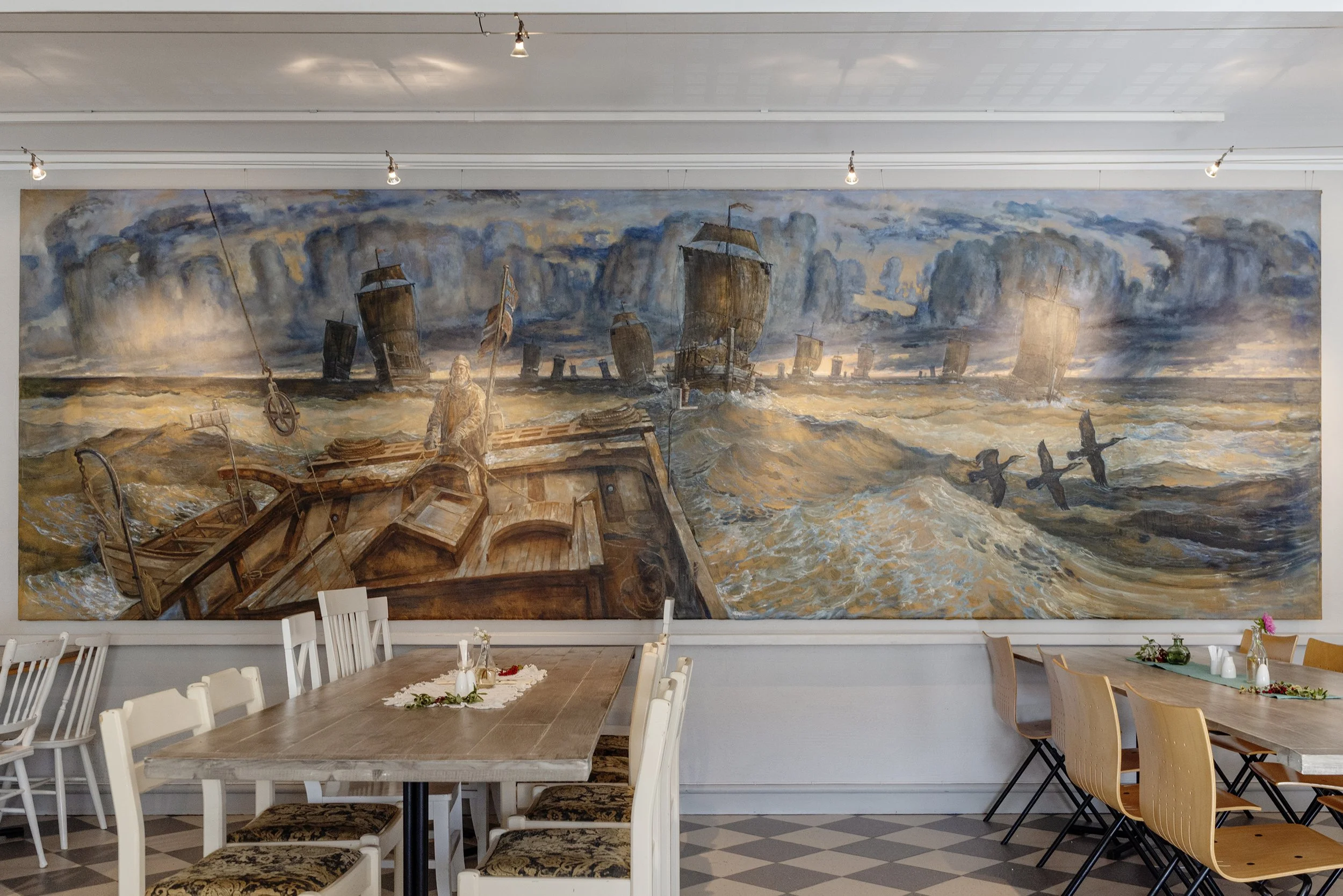
At Fjøsen Café you can enjoy coffee and local food made from locally sourced ingredients.
Pictures on this page: Karoline OA Pettersen
Did you know that…
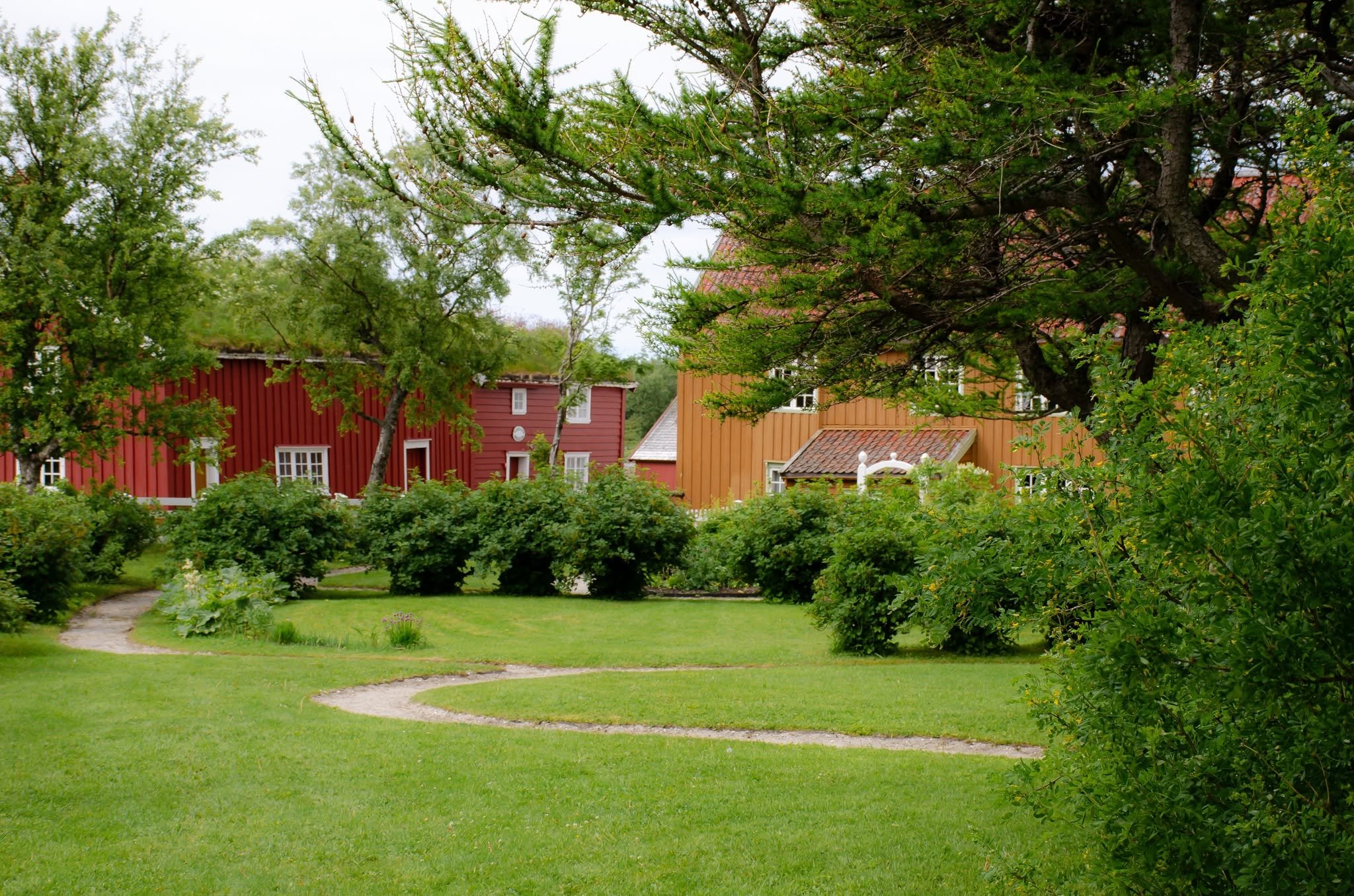
The garden on Kjerringøy trading post was more than beautiful flowers and green trees. It was a gathering place, but also a symbol of status, knowledge and prosperity. Herbs, crops, flowers and trees were grown here. It was the vicarages and trading posts that had the first and largest gardens in Northern Norway in the 19th century.
Practical information
Opening hours : Open café every Saturday 11:30-15:00 (closed between December 13-January 22)
Entrance tickets are purchased upon arrival. Tickets required in the area during the season. Tickets required in the Main House all year round.
Facilities: Café with food service and museum shop. Elevator in the reception and café building. Universally designed café and reception. Accessible for wheelchair users on the 1st floor of the Main Building and Krambod via ramps (must be notified in advance by email).
Prices
Area ticket: adult 155 NOK, senior/student 140 NOK
With guided tour : adult 199 NOK, senior/student 180 NOK
Children and young people under 18 years of age: free regular admission
Group entry (min. 15 paying): NOK 140 per person
Group with guided tour (min. 15 paying): NOK 180 per person
Special prices apply for visits outside of regular opening hours.
Address: Kjerringøyveien 1129, 8093 Kjerringøy
Ferry route Festvåg-Misten here , Bus route here .
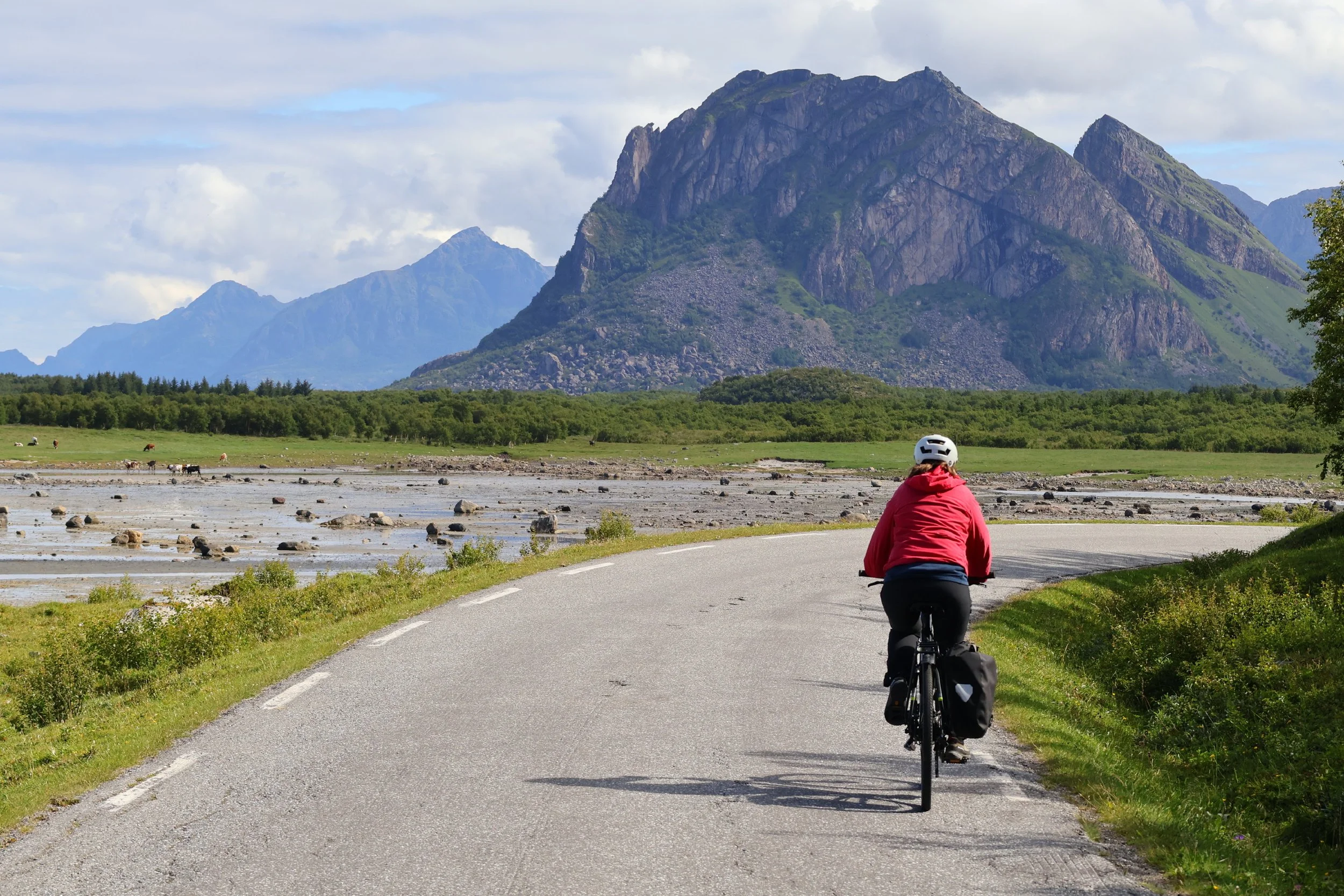
Kjerringøy is located 40 km north of Bodø along Rv.834. When you arrive at Festvåg and the ferry terminal, it is a short 10-minute ferry ride across to Misten and Kjerringøy. From the ferry terminal it takes 15 minutes to drive into the center of Kjerringøy where the Kjerringøy trading post is located.
Parking for the trading site is at the church, which is located opposite the trading site.
Contact us: Tel: +47 910 06 443 Email: booking.kjerringoy@ nordlandsmuseet .no

Booking


History of the museum
The trading posts were a turning point in the history of Northern Norway. With these posts, the trade monopoly of the cities in the south was abolished, and more of the profits from the fish trade in the north remained in the region. This was important for the region's development beyond the 19th century.
Before the trading post and inn license came into effect in the 1770s, Kjerringøy had been a church site, courthouse, citizen's residence, skipper's residence and execution site for a long time. Burial mounds from the Iron Age and a medieval cemetery are located in the immediate vicinity.
The first person to obtain a trading license on Kjerringøy was Johannes S. Bernhoft in 1775. His son Adam Humbold Bernhoft ran the place after his father. The Bernhofts never managed to build the place up to become particularly important.
In 1803, Christen Sverdrup bought the trading post and built up a robust business. He built several houses, and Kjerringøy began to gain more importance. Upon his death in 1829, his eldest daughter Anna Elisabeth Ellingsen and her husband Jens Nicolai Ellingsen inherited the place. Ellingsen came from a family with many traders. His father and 6 uncles traded in fish and fish products all over northern Nordland, and the family made a strong mark. In 1849, Ellingsen died, and his widow Anna Elisabeth continued to run the business alone, until in 1859 she married her commercial agent Erasmus BK Zahl.
Anna Elisabeth died in 1879, Zahl in 1900. All owners of the trading post after Zahl's death are descendants of Christen Sverdrup, but not in direct order of inheritance. The trading enterprise on Kjerringøy was one of the most important in the region in Zahl's time.
The facility and collection at Kjerringøy are of special character, as all the buildings and the main part of the collection of objects belong together. The collection and facility is an almost complete northern Norwegian trading post, with 15 buildings, 23 hm of archives and over 8,000 objects, most of which came with the transfer to Nordland County Museum in 1959.
The 15 buildings were listed by the Ministry of Culture and Public Education on May 30, 1942. The listing then and now included the following buildings: the main house, the restaurant building, the storeroom, the station building/new house, the cookhouse, the small boathouse, the pigsty, the bakery, the storehouse, the stables, the cellar, the forge, the large boathouse, the Rødsjåen, Grønnsjåen and Heimbrygga seahouses.
Kjerringøy is an important architectural cultural monument, and is the best-preserved facility of its type in Northern Norway. The entirety of the built environment and collection contributes greatly to the trading post's cultural heritage value.
The building history of the trading post is largely known, including through fire assessments. The main building, the wing building and the storeroom were built by Jens Nicolai Ellingsen between 1830 and 1854. Some buildings or parts of the building were built by his father-in-law Christen Sverdrup, father of Anna Elisabeth Ellingsen. This applies to Heimbrygga, the stables, the firehouse and possibly parts of the farmhouses.
The trading post buildings stand as they did in its heyday in the 19th century. The only houses on the site that were not included in the 1959 sale were those located outside the yard, along the outfield and on other islands; summer barn, new barn (Zahlfjøsen), two large boathouses, two piers and a small trandamperi. The building mass in the yard that was photographed between 1865 and 1900 is the same as is preserved today on Kjerringøy. The houses have undergone minor or major restorations to varying degrees over the years. Both exteriors and interiors are maintained according to antiquarian principles, and contain several interesting details, in addition to their greatest value, which is represented by the complete cultural environment they collectively constitute.